by Jim McAllister
Route 66, sometimes known as "The Mother Road" or "The Will Roger’s Highway", is probably still the most talked about highway in the United States. Starting at Jackson Boulevard and Lakeshore Drive in Chicago, it ran in the shape of a crescent from Chicago to Santa Monica Boulevard in Los Angeles grinding its way south through Illinois then heading west through Missouri, Kansas, Oklahoma, New Mexico, Arizona, and into California.
Sunday, April 30, 2006


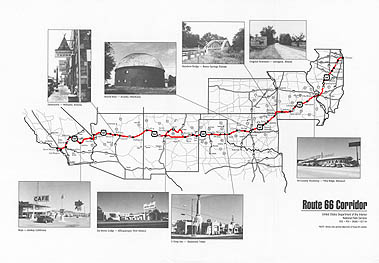
Route 66 was originated in the 1920's as a combination of existing roads which were mostly unpaved. With its heavy use in the Depression of the 1930's, it became a road of both romance and despair as it was the route to California for both the more fortunate of that dreadful era and for those less fortunate that were fleeing the "dust bowl" of Oklahoma in search of a new life out west. The plight of these "Okies" was best described by John Steinbeck in THE GRAPES OF WRATH....."and they come into 66 from the tributary side roads, from the wagon tracks and the rutted country roads, 66 is the mother road, the road of flight."
With the better economy in post World War II times, U. S. 66 became the busiest highway to the west and with that heavier traffic came various roadside businesses that were rather unique such as the Wigwam Motel in Holbrook, Arizona, the Route 66 diner in Albuquerque, and the Snocap Drive-in in Seligman, Arizona. These places still exist while many others have disappeared through the years after the demise of Route 66 in the mid 1980's.
With the better economy in post World War II times, U. S. 66 became the busiest highway to the west and with that heavier traffic came various roadside businesses that were rather unique such as the Wigwam Motel in Holbrook, Arizona, the Route 66 diner in Albuquerque, and the Snocap Drive-in in Seligman, Arizona. These places still exist while many others have disappeared through the years after the demise of Route 66 in the mid 1980's.
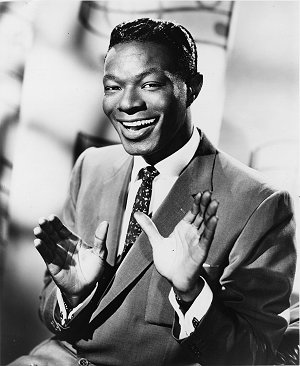
In 1946 musician Bobby Troup was driving west on 66 with his wife when he wrote the famous ode to the mother road, "Route 66". It was later recorded by Nat "King" Cole and most of the words bring back memories to me of my connections to the old road: "When you make that California trip...." I grew up in Cincinnati, Ohio. In 1959, I met a young lady from Los Angeles who was visiting her father in Cincy. I became enamored with her and decided to drive to California with a friend later that summer to visit her. This gave me the opportunity to travel Route 66 from St. Louis to Santa Monica and enjoy one of the first adventures of my young life as I went through parts of the country that I had never known. It was a great experience that I will never forget. I remember thinking, "Wow!" when I crossed into California.
"Now you go through St. Louis....You see Amarillo..." The time is late December of 1961. I have been in the Air Force for three months and have just completed Supply Tech School at Amarillo Air Force Base in Texas. I am trying to get to Cincinnati for Christmas via a Greyhound bus and after traveling all night via Route 66 I arrive in St. Louis at 7:00 a.m. to find that I missed my connecting bus to Ohio by fifteen minutes. This necessitated a wait until 4:30 that afternoon for the next bus. As unpleasant as that was, I will always fondly remember the camaraderie with my fellow servicemen on that long bus ride up 66.
"Now you go through St. Louis....You see Amarillo..." The time is late December of 1961. I have been in the Air Force for three months and have just completed Supply Tech School at Amarillo Air Force Base in Texas. I am trying to get to Cincinnati for Christmas via a Greyhound bus and after traveling all night via Route 66 I arrive in St. Louis at 7:00 a.m. to find that I missed my connecting bus to Ohio by fifteen minutes. This necessitated a wait until 4:30 that afternoon for the next bus. As unpleasant as that was, I will always fondly remember the camaraderie with my fellow servicemen on that long bus ride up 66.

"Flagstaff, Arizona. Don’t forget Winona, Kingman, Barstow, San Bernardino...." I have always had itchy feet. Cincinnati was a good place to grow up but I made up my mind as a youth that I was not going to spend my life there. Television may have had a hand in that decision as I would watch the football games from the West Coast with all the sunshine and happy people in the stands with their colorful short sleeve shirts on in December. At the same time it would be dark in Cincy with cold rain pelting the windows. When I finally got my chance to head west, I grabbed it with a vengeance. Thank you Linda Devereaux, wherever you are, for encouraging me to visit you in those salad days of 1959. I still remember the excitement of driving my non-air conditioned ‘57 Chevy on old two lane Route 66 and going through Flagstaff and the pines, then dropping down to the desert of Kingman and on through Needles, California, across the Mojave Desert to Barstow and San Bernardino and finally Los Angeles. I was in awe as I saw the Pacific Ocean for the first time; it was a little more impressive sight than the Ohio River.
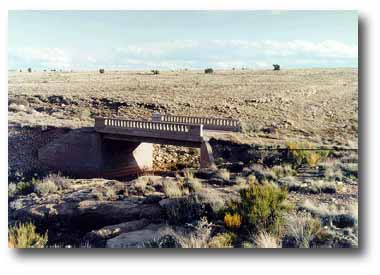
The old road may have had a song written about it plus a television show from the early 1960's, but the passage of time finally had its say and Route 66 was decommissioned as a major highway in 1985. Luckily, several states have preserved portions of the road that are popular tourist attractions and there are those who take Route 66 vacations along the various portions that still exist. Sure, the interstates are faster and safer but do they have the romance of the old highway? I don’t think so. At the closing of Route 66 in the 1980's, noted CBS newsman Charles Kuralt stated that, "Now you can travel across the entire country and not see anything." I agree. (Do you have memories of Route 66? Tell me about them at azjimmcallister@cox.net.
Monday, April 24, 2006
ONE CD, ONE MOVIE, ONE BOOK: THREE REVIEWS
by Jim McAllister
David Gilmour is doing a bit of relaxing "On An Island", Aaron Eckhart is a tobacco huckster, and if you like history, especially Chicago history, you have to like Erik Larson. Yes, ladies and gentlemen, it is time for Jim’s fearless reviews of one CD, one movie, and one book.
David Gilmour is doing a bit of relaxing "On An Island", Aaron Eckhart is a tobacco huckster, and if you like history, especially Chicago history, you have to like Erik Larson. Yes, ladies and gentlemen, it is time for Jim’s fearless reviews of one CD, one movie, and one book.
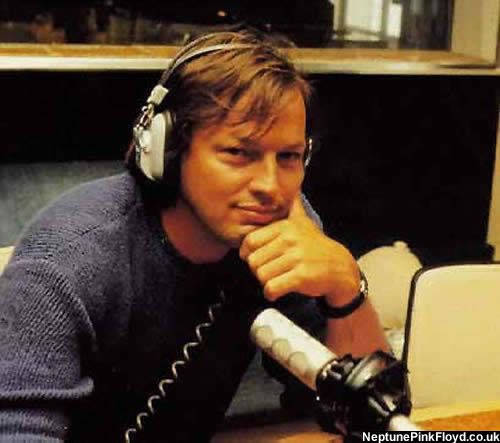
THE CD: It is "On An Island", the latest from David Gilmour of Pink Floyd. I had to give this one a couple of plays as my first impression was Gilmour has gone the way of Rod Stewart with the easier listening stuff. After all, these guys are all over sixty now (Gilmour released "On An Island" the day after birthday number 60 on March 6) and I suppose we are finally finding out what happens to all our 1960's and ‘70's favorites when they reach that milestone (except for the always ageless Rolling Stones!).
As I was ready to dismiss "On An Island" as Pink Floyd lite, cut number four, "Take A Breath" came on and suddenly I was back with "The Wall" and "Animals" and heaven. Then I was ushered into "Red Sky At Night" and suddenly I was on and island viewing dusk and sipping a Corona. Gilmour is so influential with his sax playing on this cut (that’s right, sax) that the imagery is almost eerie. Consensus: It may take a couple of plays for Floyd fans to appreciate this one, but that should do the job. From the short intro into the title track through the final of ten cuts, "Where We Start", this is David Gilmour at his finest. "On An Island" could be called the ultimate "date record". It’s been twenty years since Gilmour’s last solo effort but it was worth the wait.
As I was ready to dismiss "On An Island" as Pink Floyd lite, cut number four, "Take A Breath" came on and suddenly I was back with "The Wall" and "Animals" and heaven. Then I was ushered into "Red Sky At Night" and suddenly I was on and island viewing dusk and sipping a Corona. Gilmour is so influential with his sax playing on this cut (that’s right, sax) that the imagery is almost eerie. Consensus: It may take a couple of plays for Floyd fans to appreciate this one, but that should do the job. From the short intro into the title track through the final of ten cuts, "Where We Start", this is David Gilmour at his finest. "On An Island" could be called the ultimate "date record". It’s been twenty years since Gilmour’s last solo effort but it was worth the wait.

THE MOVIE: "Thank You For Smoking", Fox Searchlight Pictures, rated R for sexuality and language, 92 minutes....If you decide to see this, be sure you like satire. It used to be said that satire closes on Saturday night so this one isn’t for everyone although it was tenth nationally in box office receipts two weeks ago.
"Thank You For Smoking" is a good adult comedy based on the book by Christopher Buckley that, at 92 minutes, is just the right length for a story of an expert master of the spin. That master is Nick Naylor (Aaron Eckhart) and as he prances through the movie in his Armani suits, he brings new meaning to the definition of sleazy lobbyist. His job is to lobby for the big cigarette companies and because of this he is universally despised. Whether he is discussing his job to a classroom of kids which includes his twelve year old son (who implores his father to not "ruin my childhood") or is speaking before a Senate committee headed by a staunch, anti-smoking Senator (William H. Macy) who wants to put "poison" stickers on cigarette packs, Nick proudly embraces his belief that "if you argue correctly, you’re never wrong.".
Some of the funniest scenes are the weekly lunch meetings with Nick and his pals from the gun and liquor lobbies (The M.O.D. squad, "merchants of death", David Koechner and Maria Bello). Robert Duvall is also good as the captain, the head of the pro smoking organizations. This movie is tough but has a heart as Nick has a special empathy for his son (Cameron Bright) which is a nice contrast to the negativity of his character. It is well worth seeing.
"Thank You For Smoking" is a good adult comedy based on the book by Christopher Buckley that, at 92 minutes, is just the right length for a story of an expert master of the spin. That master is Nick Naylor (Aaron Eckhart) and as he prances through the movie in his Armani suits, he brings new meaning to the definition of sleazy lobbyist. His job is to lobby for the big cigarette companies and because of this he is universally despised. Whether he is discussing his job to a classroom of kids which includes his twelve year old son (who implores his father to not "ruin my childhood") or is speaking before a Senate committee headed by a staunch, anti-smoking Senator (William H. Macy) who wants to put "poison" stickers on cigarette packs, Nick proudly embraces his belief that "if you argue correctly, you’re never wrong.".
Some of the funniest scenes are the weekly lunch meetings with Nick and his pals from the gun and liquor lobbies (The M.O.D. squad, "merchants of death", David Koechner and Maria Bello). Robert Duvall is also good as the captain, the head of the pro smoking organizations. This movie is tough but has a heart as Nick has a special empathy for his son (Cameron Bright) which is a nice contrast to the negativity of his character. It is well worth seeing.
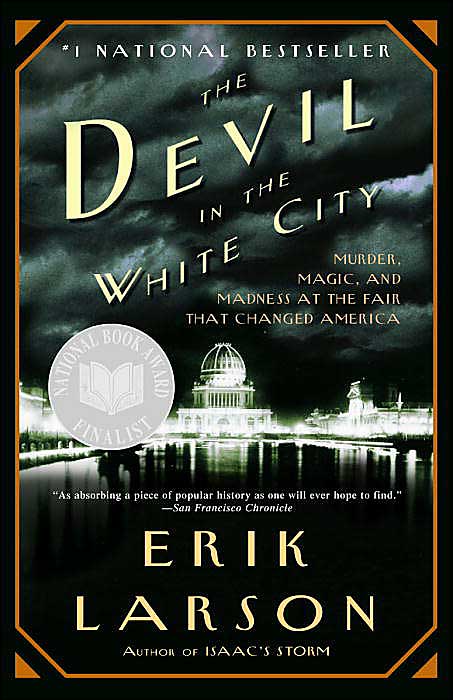
THE BOOK : "The Devil in the White City" by Erik Larson, 390 pages, paperback, Vintage Books. As a fairly keen observer of American history, this book was of special interest to me as it was not only about our history but covers an especially interesting time, that of the 1880's and 1890's. This was a time when the industrial revolution was gaining a foothold with many "miracles" of the time being discovered and invented. It was also still an era of Victorian thinking which made for an interesting combination. This is a true story of the light and dark sides involved in the building of the "White City" which was the 1893 Chicago World’s Fair. Intertwined with these details is the story of a serial killer using the backdrop of the Fair to lure his victims. Erik Larson has done his homework, as thirty-three pages of bibliography will attest, to bring out all the characters and frustrations involved with this monumental project. Once you start into the book, you will have to keep in mind that it is a non-fiction piece as it reads like a novel. Larson’s use of imagery to describe the filth and pestilence of Chicago in the gilded age is remarkable as it makes you feel that you are inhaling the smoke filled air and looking at the endless litter. "The Devil in the White City" is a must for those who enjoy a work of well crafted non-fiction that includes a learning experience. I highly recommend it. (Comments? Questions?: azjimmcallister@cox.net.
ONE MORE NOTE: I have added a few more links to the blog all of which bear a relationship to the subjects I write about. With one click you can now check out "Google News", click "North Scottsdale" for information about that area, movie and TV details are available from "IMDB", programmming notes and information from public radio and TV can be obtained by clicking "NPR" and "PBS", and by clicking "INDEPENDENT" you can read the entire "NORTH SCOTTSDALE INDEPENDENT" online. Thanks for reading and I hope you enjoy the site!
ONE MORE NOTE: I have added a few more links to the blog all of which bear a relationship to the subjects I write about. With one click you can now check out "Google News", click "North Scottsdale" for information about that area, movie and TV details are available from "IMDB", programmming notes and information from public radio and TV can be obtained by clicking "NPR" and "PBS", and by clicking "INDEPENDENT" you can read the entire "NORTH SCOTTSDALE INDEPENDENT" online. Thanks for reading and I hope you enjoy the site!
Monday, April 17, 2006
"WATCHING THE DETECTIVES" THROUGH THE TELEVISION YEARS
by Jim McAllister
"Watching the detectives, ‘Ooh, he’s so cute.’" That refrain was recorded by Elvis Costello in 1977 but covered much of the appeal of television detectives to female viewers through the years. Whether it was Edd "Kookie" Byrnes or Efrem Zimbalist, Jr. from "77 Sunset Strip" in the 1950's on through to Chris Noth of "Law and Order" in the 1990's and beyond, the ladies loved these guys for their good looks and heroic deeds. Men liked them also for being so tough, cool, and usually winning the best looking babe on the show. These programs were exciting and easy to understand thus propelling some of them to high ratings.
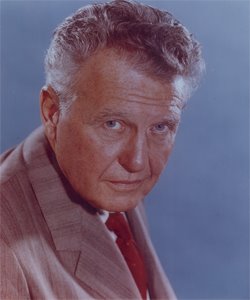
One of the earliest entries was "Man Against Crime"(1949-1956) starring perennial movie second lead Ralph Bellamy. This show carried over some of the traits of film noir from the movies since it originated in 1949. Bellamy played hard boiled P. I. Mike Barnett, a Dashiell Hammett type character, who usually spoke with his fists. It was a popular show that was a mainstay on CBS for many years.
"Watching the detectives, ‘Ooh, he’s so cute.’" That refrain was recorded by Elvis Costello in 1977 but covered much of the appeal of television detectives to female viewers through the years. Whether it was Edd "Kookie" Byrnes or Efrem Zimbalist, Jr. from "77 Sunset Strip" in the 1950's on through to Chris Noth of "Law and Order" in the 1990's and beyond, the ladies loved these guys for their good looks and heroic deeds. Men liked them also for being so tough, cool, and usually winning the best looking babe on the show. These programs were exciting and easy to understand thus propelling some of them to high ratings.
One of the earliest entries was "Man Against Crime"(1949-1956) starring perennial movie second lead Ralph Bellamy. This show carried over some of the traits of film noir from the movies since it originated in 1949. Bellamy played hard boiled P. I. Mike Barnett, a Dashiell Hammett type character, who usually spoke with his fists. It was a popular show that was a mainstay on CBS for many years.
During the same era, another type of private eye emerged on the TV scene. That was the more analytical and thoughtful type of sleuth. Two examples are "The Adventures of Sherlock Holmes" which ran as a syndicated series in 1954 and "The Adventures of Ellery Queen" which was first on from 1950-1952. These programs put the emphasis on the more cerebral aspects of the cases and eliminated much of the violence of some of their contemporaries. Ellery Queen challenged the viewer to put the pieces of the crime together and arrive at a solution. At the end of the program was usually a denoument to explain to the audience how Ellery figured out the case.
Another early style of detective show was the serio-comic approach which usually involved the comic interaction of a husband/wife or boyfriend/girlfriend as they went about the solving of a case. Examples of this style were shows like "Mr. And Mrs. North" (1952-1954), "Boston Blackie" (1951-1953), and "The Thin Man" (1957-1959).
Another early style of detective show was the serio-comic approach which usually involved the comic interaction of a husband/wife or boyfriend/girlfriend as they went about the solving of a case. Examples of this style were shows like "Mr. And Mrs. North" (1952-1954), "Boston Blackie" (1951-1953), and "The Thin Man" (1957-1959).

Subscribe to:
Posts (Atom)